

According to the Washington Post's latest revelations, a combination of ship tracking systems, satellite imagery, and sanctions databases indicate that two large containerized cargo ships owned by the Islamic Republic of Iran Shipping Lines (IRISL) have set sail from Chinese ports to return to Iran with a cargo suspected of containing sodium perchlorate - a chemical that is widely used in the manufacture of solid propellants for ballistic missiles.
The vessels involved were the Iranian-flagged Shabdis (IMO No. IMO9349588) and the Barzin (IMO No. IMO9820269, also operating as the Fanreach). (IMO No. IMO9820269, also operating as the ”Fanreach”).
According to the Vessel Positioning and Information Query System (VPQS), both vessels have recently docked at the Zhuhai Gaolan Port on the southeast coast of China.
According to the latest shipping data, the Shabdis is on its way to the Iranian port of Chabahar, where it is expected to arrive on March 16, while the Barzin is currently anchored in Malaysian waters and will then sail about 4,000 miles to the Iranian port of Bandar Abbas, where it is expected to dock next week. The Barzin is currently anchored in Malaysian waters and will then sail approximately 4,000 miles to the Iranian port of Bandar Abbas, where it is expected to dock next week.
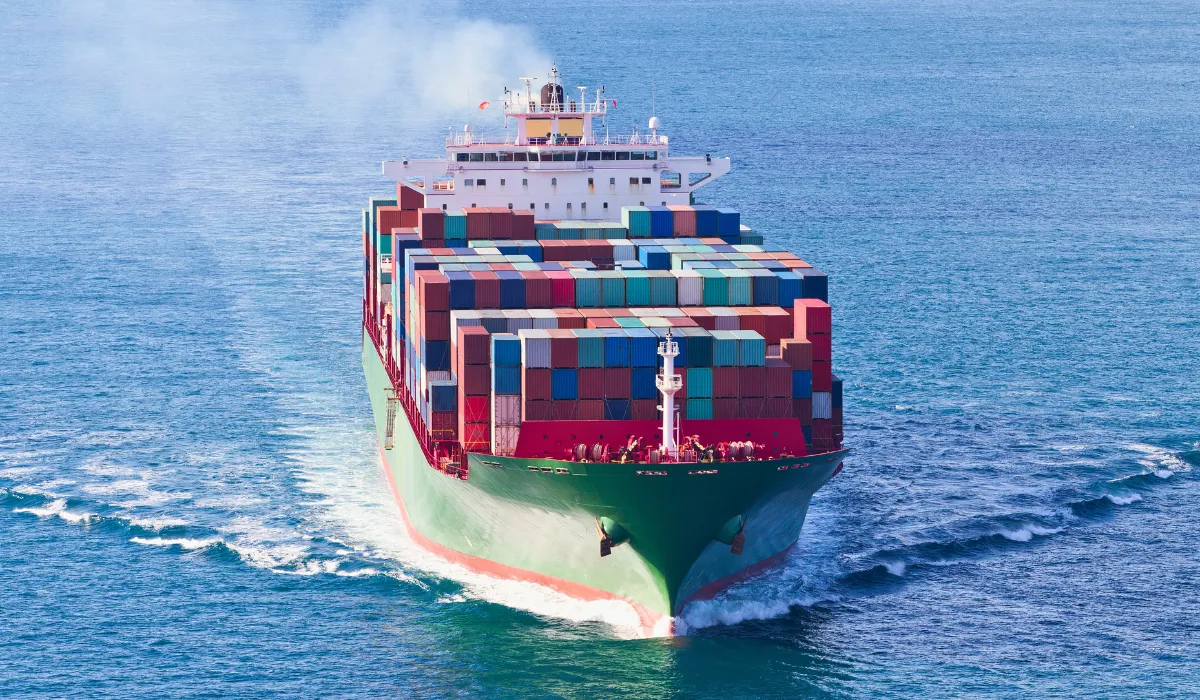
It is noteworthy that the destinations of both vessels are located in the coastal region of the Strait of Hormuz and are surrounded by important Iranian naval military bases.
It should be noted that the Washington Post's report was based primarily on an analysis of the historical routes and sanctioned status of the two cargo ships, and did not provide direct evidence that sodium perchlorate was indeed loaded on board.
Last year, the United States side accused the country's shipping enterprises of transporting materials related to Iran's ballistic missile development program and included them in the list of secondary sanctions.
U.S. officials have repeatedly accused China of allowing the transfer of missile-related materials to Iran, which the Chinese government has categorically denied, noting that the U.S. side has exaggerated the nature of normal commercial trade or dual-use material transactions.
In response to the shipment, Isaac Carden, a senior fellow at the Carnegie Endowment for International Peace, commented, ”The Chinese side is perfectly capable of stranding these ships in port through a variety of regulatory means, such as delays in administrative procedures and seizures by customs inspections, but no such measures have actually been taken.”
He further noted that this decision-making movement deserves close attention during the current sensitive period of U.S.-Iranian military confrontation.
Statistics show that since the beginning of this year, at least a dozen cargo ships under the country's shipping companies have docked at Gaolan Port, with most of them leaving the port in a fully loaded state.
Some of the cargo ships then completed unloading operations at the Iranian port of Shahid Rajaie, which is Iran's main container logistics hub and is geographically close to the Strait of Hormuz.
It was also reported that on the 9th of local time, US President Donald Trump publicly said that the US military action against Iran will ”soon” come to an end.
In the interview, Trump said he believes the military strike against Iran has been ”very deep and thorough” and claimed that Iran now has ”naval forces destroyed, communications systems crippled, an air force incapacitated, few missiles left in its inventory, and extensive strikes on drones and their production facilities” and that ”they are largely incapacitated as assessed from a military strength standpoint ”assessed from the point of view of military strength as having been largely incapacitated".
Trump also revealed that ships are still passing through the Strait of Hormuz normally, but he is still considering imposing controls on the strategic route.
On the same day, the Iranian Islamic Revolutionary Guard Corps issued a clear statement on the issue of navigation in the Strait of Hormuz, declaring that any Arab or European country that ”expels the Israeli and United States diplomatic missions” will be able to ”pass through the Strait of Hormuz in complete freedom and legality”. ".
Author: Kim
Xindashun International Logistics (Shenzhen) Co.
Tel: 13556688899
Address: 21B03, Jazz Mansion, No. 4018, Guinbin Road, Heping Community, Nanhu Street, Luohu District, Shenzhen, China